
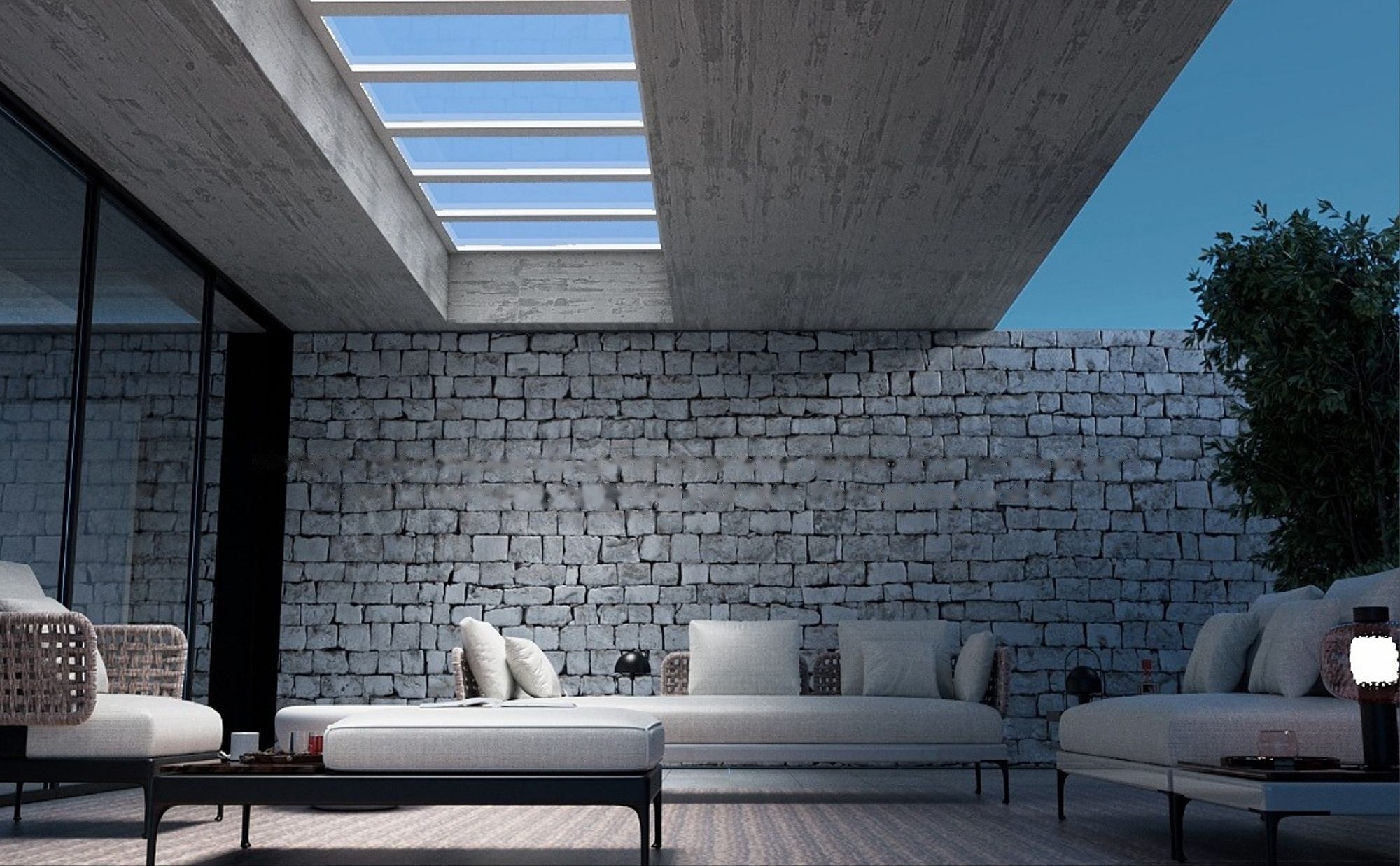
The Technology

Optical daylight recreation, explained.
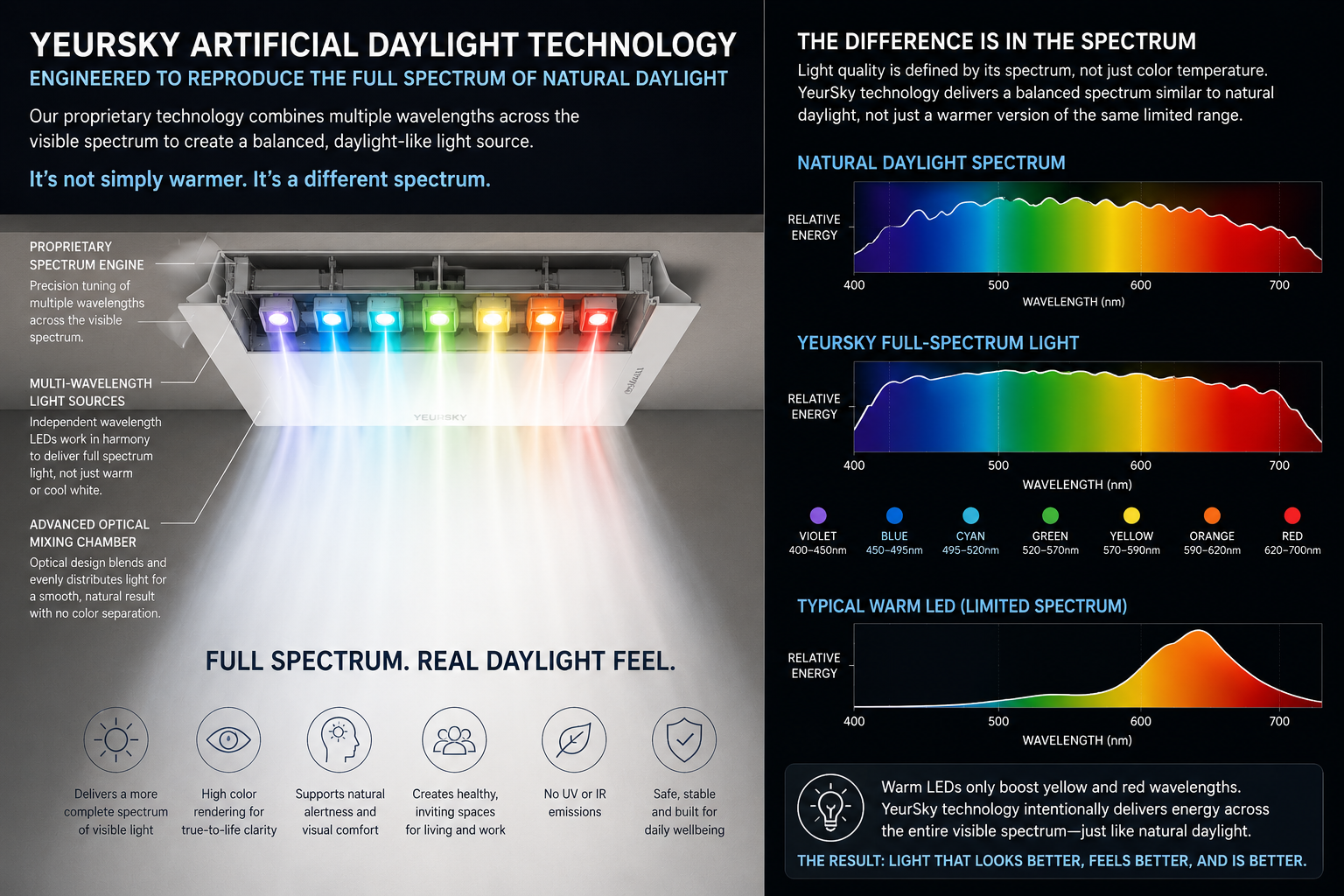
Precise micro-optics and intelligent control technology recreate the daylight spectrum — not just a brighter light, a genuinely different one.
The Problem
Some spaces will never see daylight. Until now, that was permanent.
Basements, internal rooms, deep-plan offices — any space where the architecture itself rules out a window. No amount of clever standard lighting changes that; a warmer bulb still isn't daylight. Artificial daylight technology exists specifically to solve the spaces that conventional lighting can't.
How It Works
Light, engineered to behave like daylight — not just look like it.
Most "daylight" lighting products are really just a warmer-toned LED — a single fixed colour temperature that resembles daylight at one moment, in one condition, and never changes. That's a lighting trick, not daylight.
Artificial daylight technology works differently. Rather than emitting one fixed tone, the system is engineered to reproduce a fuller spread of the visible daylight spectrum — the mix of wavelengths your eyes actually associate with real sky light, rather than a single flattering colour. Some systems are also able to shift gradually through the day, echoing the way real daylight itself changes from morning through to evening, rather than staying static from the moment it's switched on.
The result a room experiences isn't "brighter lighting" — it's light that reads, both visually and physiologically, as daylight, even in a space that structurally could never have a window.
How It Compares
Artificial daylight vs. the alternatives.
Artificial Daylight
-
SpectrumEngineered to reproduce a fuller daylight spectrum
-
Changes through the dayAvailable on systems designed to echo natural daylight
-
Works with no windowThis is exactly what it's designed for
-
Structural workCeiling void install — no external opening
-
Weather independentConsistent, year-round
Standard LED Panel
-
SpectrumSingle fixed colour temperature
-
Changes through the dayStatic once installed
-
Works with no windowYes, but reads as artificial light, not daylight
-
Structural workMinimal — standard fitting
-
Weather independentConsistent, year-round
Real Skylight
-
SpectrumTrue natural daylight
-
Changes through the dayNaturally, all day
-
Works with no windowRequires an aperture to the sky
-
Structural workSignificant — roof or structural opening
-
Weather independentVaries with weather, season and time of day
Exact certified figures — colour rendering index, lumen output, running cost — are confirmed manufacturer data and available in the full specification pack, rather than published here in general terms.
Common Questions
Questions we hear most.
No. Standard LED lighting is designed to illuminate a room; this technology is engineered specifically to reproduce the daylight spectrum, not just raise brightness. Brightness alone doesn't make a room feel daylit — the spectrum and quality of the light is what does that.
That's the specific point of the technology — daylight-spectrum light is widely understood to affect mood and alertness differently to standard artificial lighting, which is exactly why the distinction between "bright" and "daylight" matters for windowless spaces.
In most cases, yes, subject to available ceiling void depth — this is exactly the kind of project-specific detail our specification pack and technical support are for. Get in touch with your room or ceiling details and we'll confirm feasibility directly.
A rooflight or sun tunnel still needs a physical route to the sky — a roof opening and a clear run down through the building. Artificial daylight technology needs neither, which is exactly what makes it viable for basements, internal rooms and any space with no access to the roof or an external wall.
This depends on the specific system and installation size, so we'd rather give you an accurate figure than a generic estimate — it's included as standard in every specification pack.